

President James Monroe visited Kennebunk
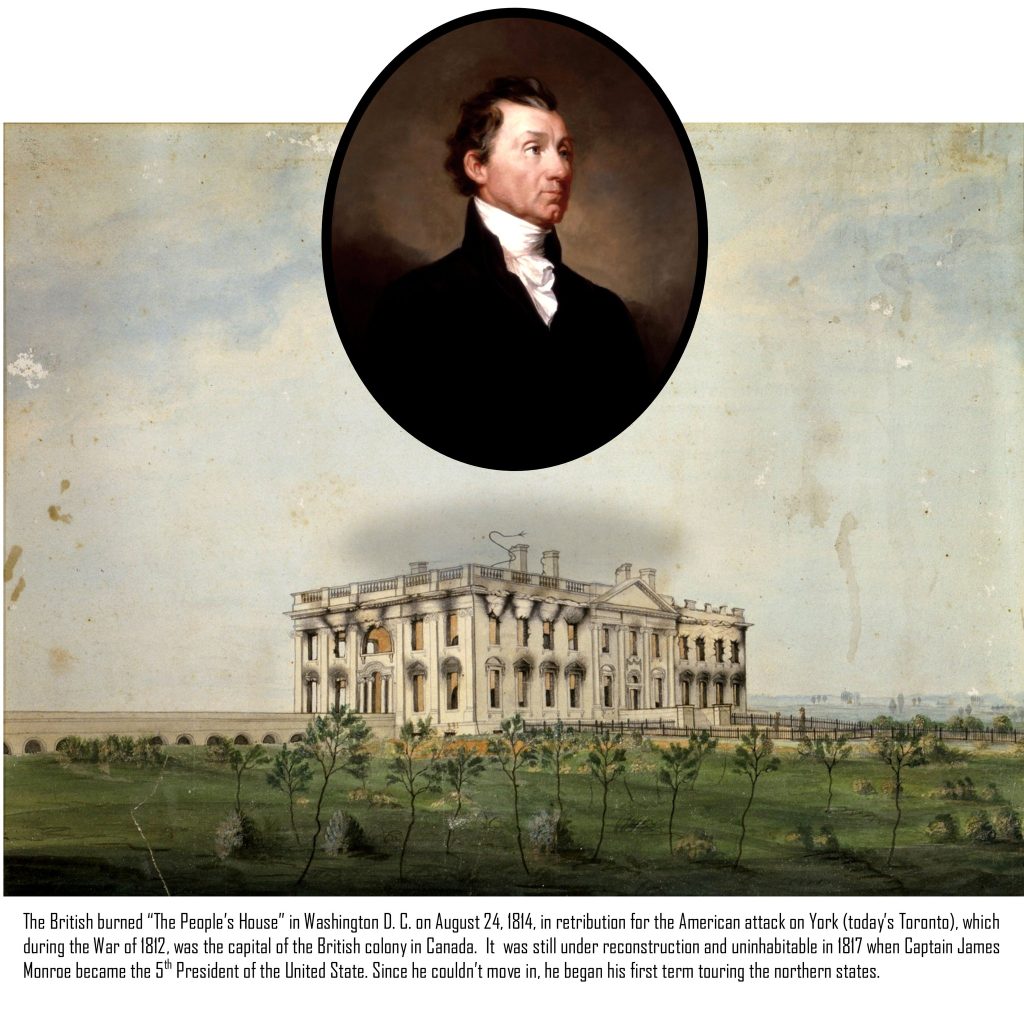
The British burned “The People’s House” in Washington D. C. on August 24, 1814, in retribution for the American attack on York (Toronto), which during the War of 1812, was the capital of the British colony in Canada.
The White House was still under reconstruction and uninhabitable when Captain James Monroe became the 5th President of the United State. Since he couldn’t move in, he began his first term touring the northern states. He was the first American President to visit Maine. People along his route from Kittery to Portland, on July 16, 1817, greeted him with patriotic reverence, even the Federalists.
Representatives of Wells and Arundel formed a committee to plan a proper celebration for the visit of such a dignitary. Joseph Dane, Henry Clark, George W. Wallingford, Simon Nowell, Horace Porter, John U. Parsons, Joseph Storer, Samuel Curtis, Jr., and George Wheelright agreed that the ceremony should take place in the part of Wells, then known as Kennebunk Village. Monroe’s arrival at Kennebunk was announced by the discharge of a cannon and ringing of the church bell.
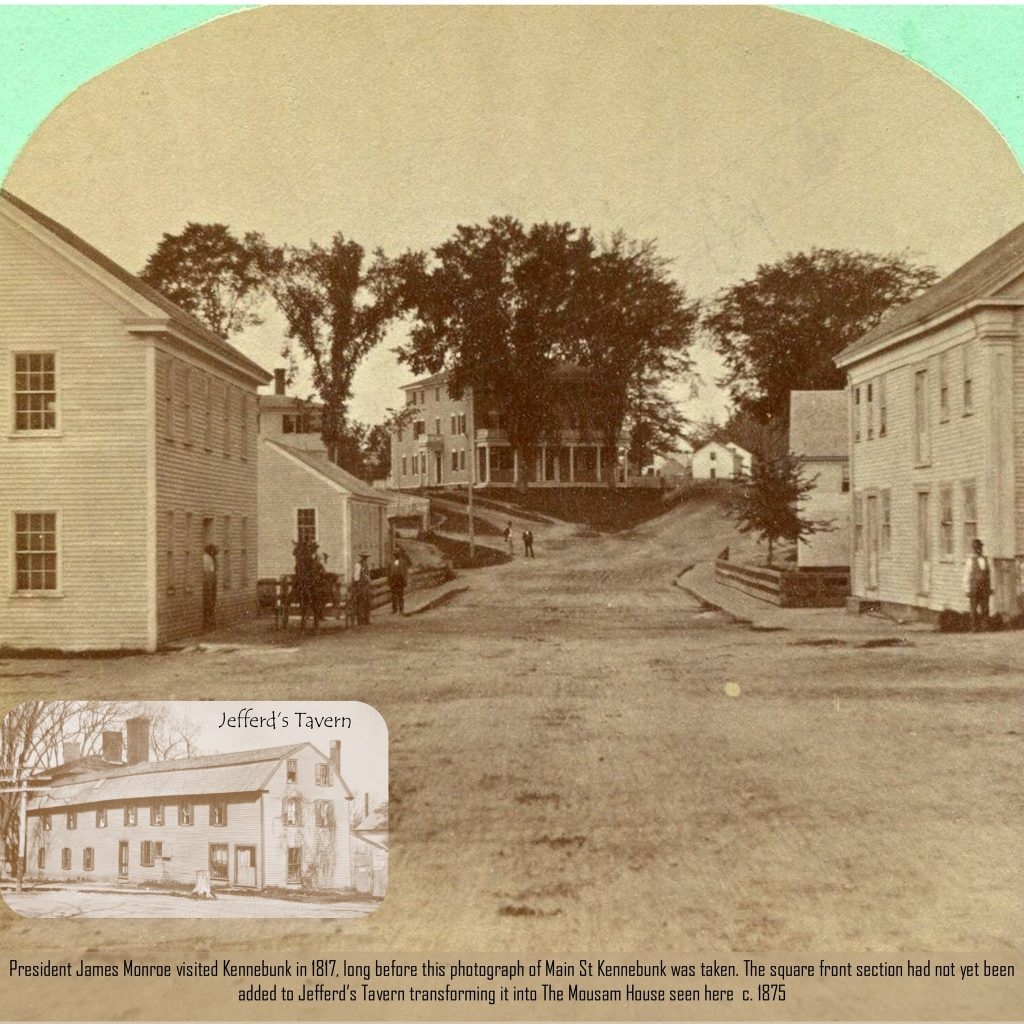
Refreshments were served at Jefferds Inn (later known as the Mousam House) followed by Mr. George W. Wallingford’s welcome speech in which he expressed his gratitude “for the peaceful state of our country.” President Monroe replied, “Nothing but union is wanting to make us a great people.”
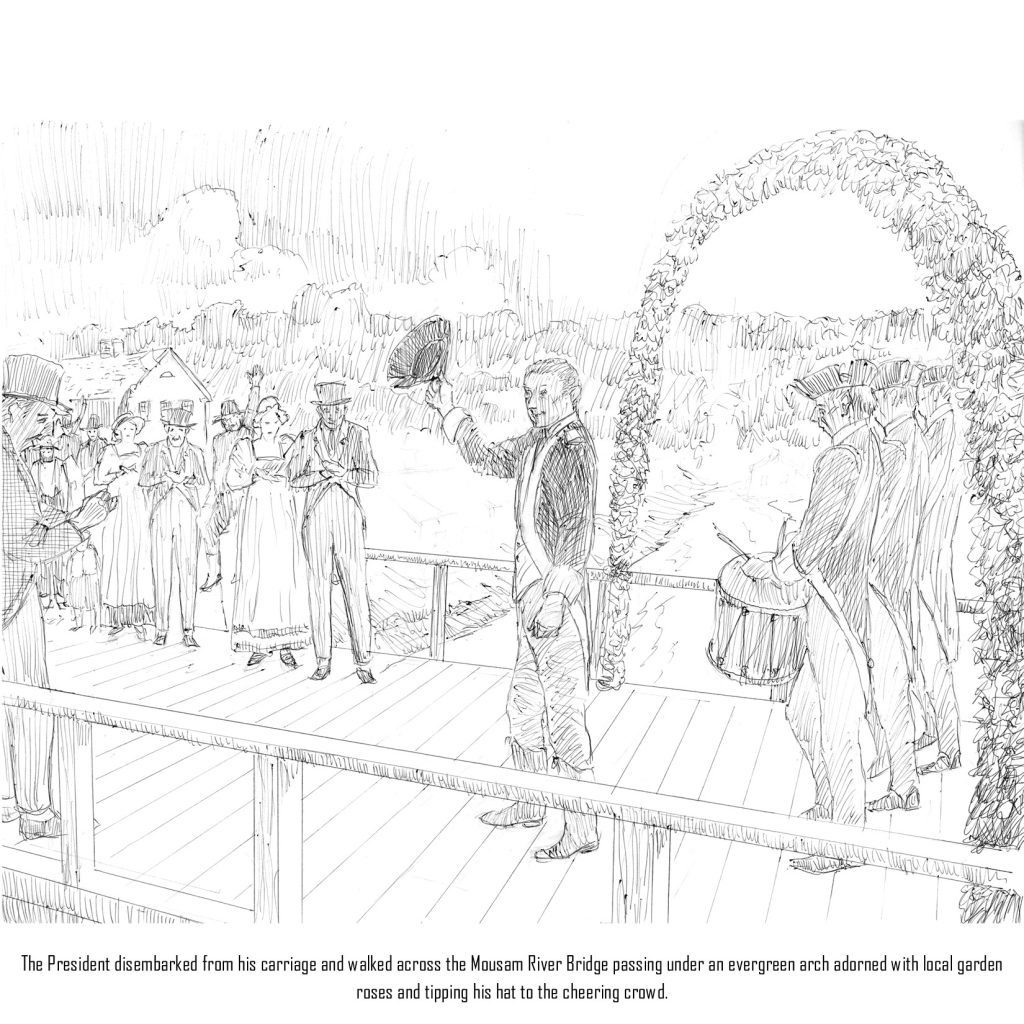
The President disembarked from his carriage and walked across the Mousam River Bridge passing under an evergreen arch adorned with local garden roses and tipping his hat to the cheering crowd.
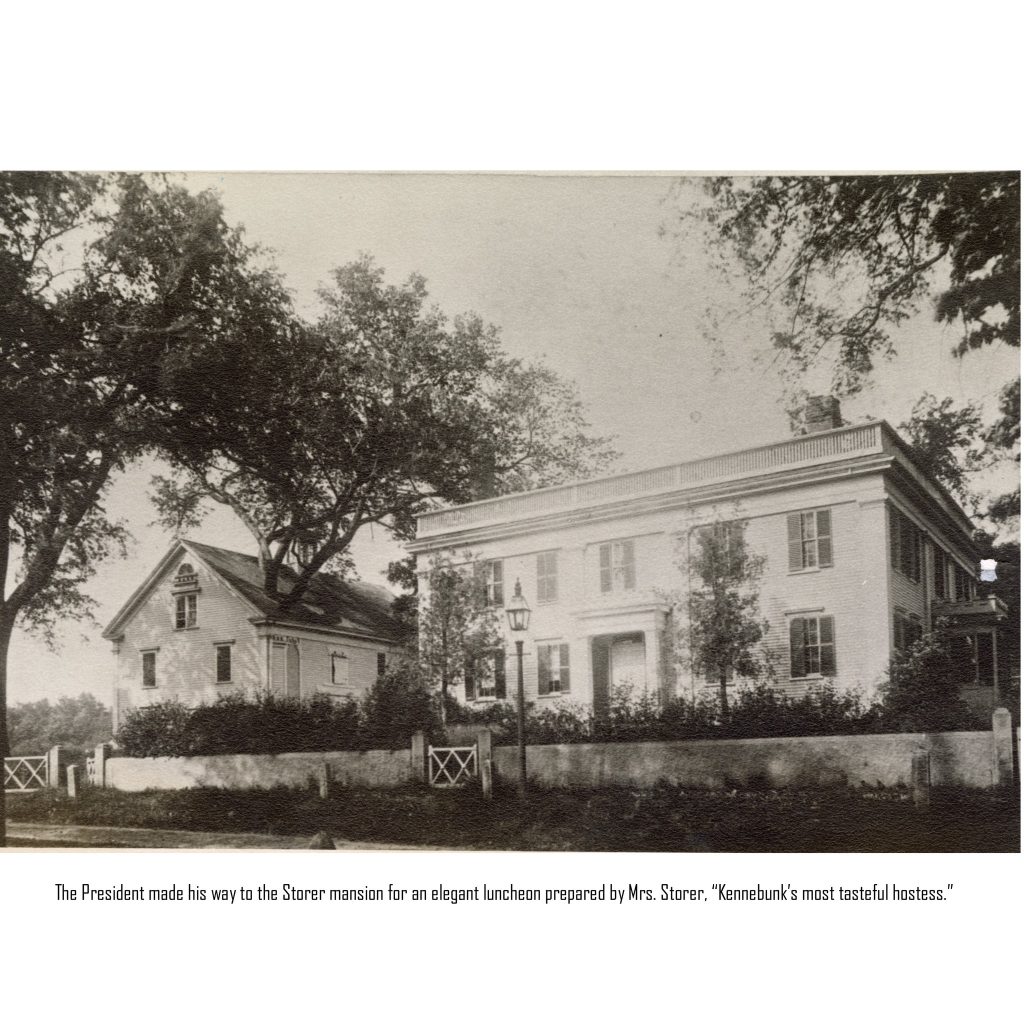
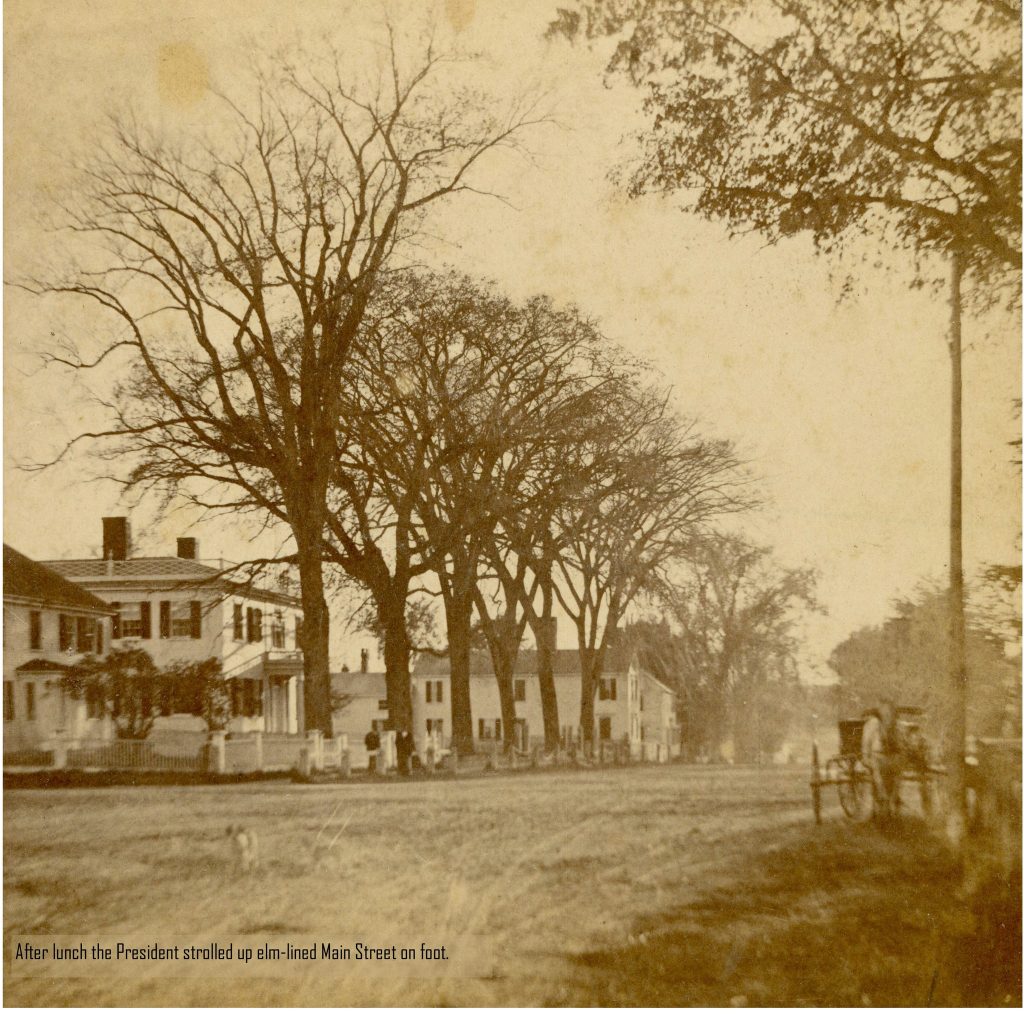
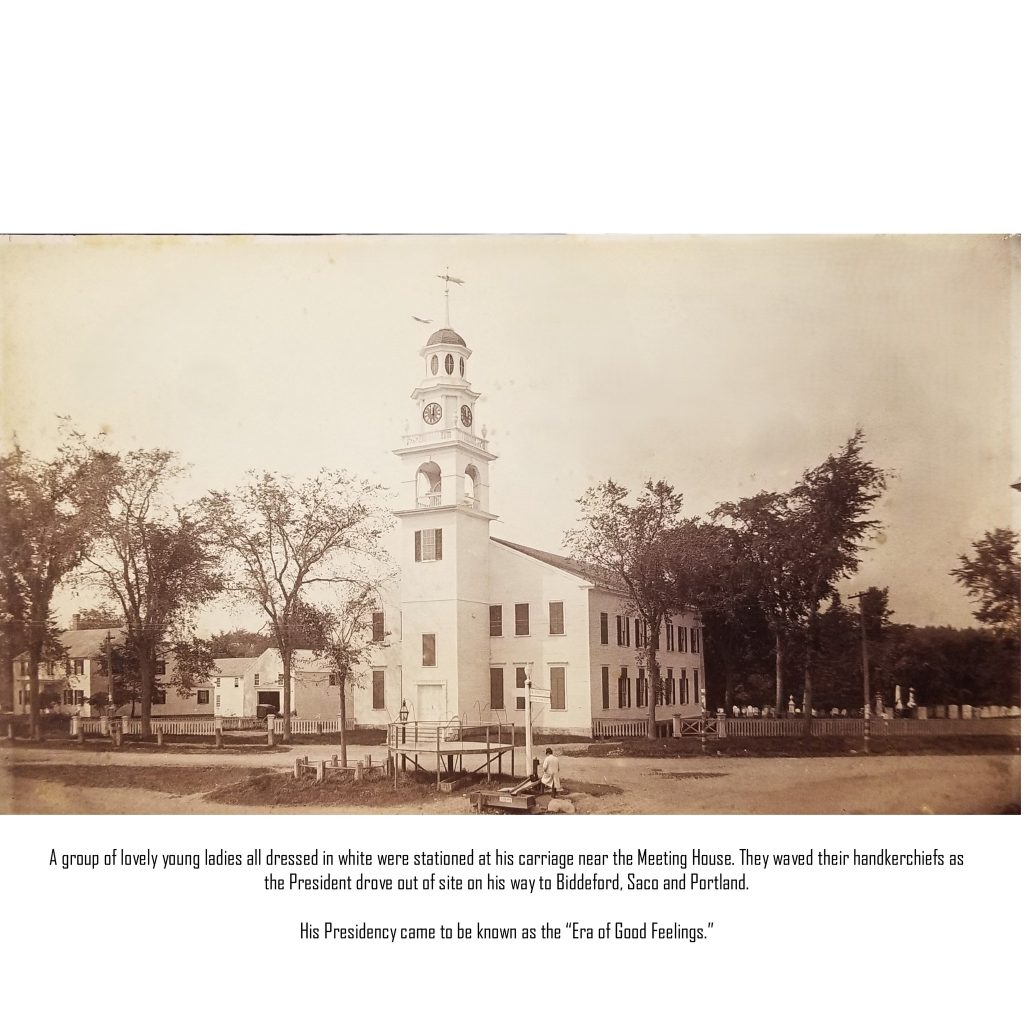
He then made his way to the Storer mansion for an elegant luncheon prepared by Mrs. Storer, Kennebunk’s “most tasteful hostess”. After lunch he strolled up elm-Lined Main Street on foot. A group of lovely young ladies all dressed in white were stationed at his carriage near the Meeting House. They waved their handkerchiefs as the President drove out of site on his way to Biddeford, Saco and Portland. His Presidency came to be known as the “Era of Good Feelings.”
Leave a Reply