

Passamaquoddy and Penobscot History
This year marks the 250th anniversary of the signing of the Declaration of Independence. George Washington met with Passamaquoddy citizens of Maine and asked them to fight with him against the British during the American Revolution. In exchange for their support, he made since-broken promises to protect their land rights in an independent America.
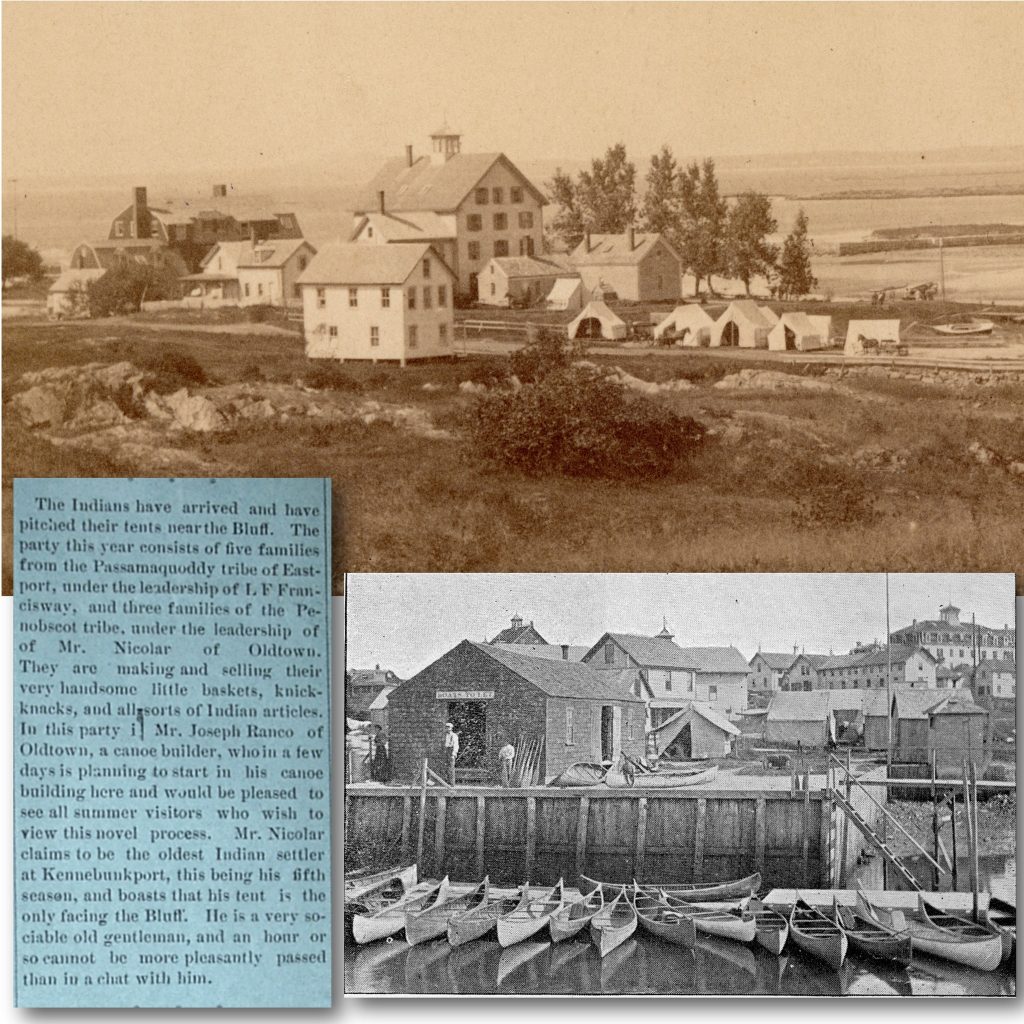
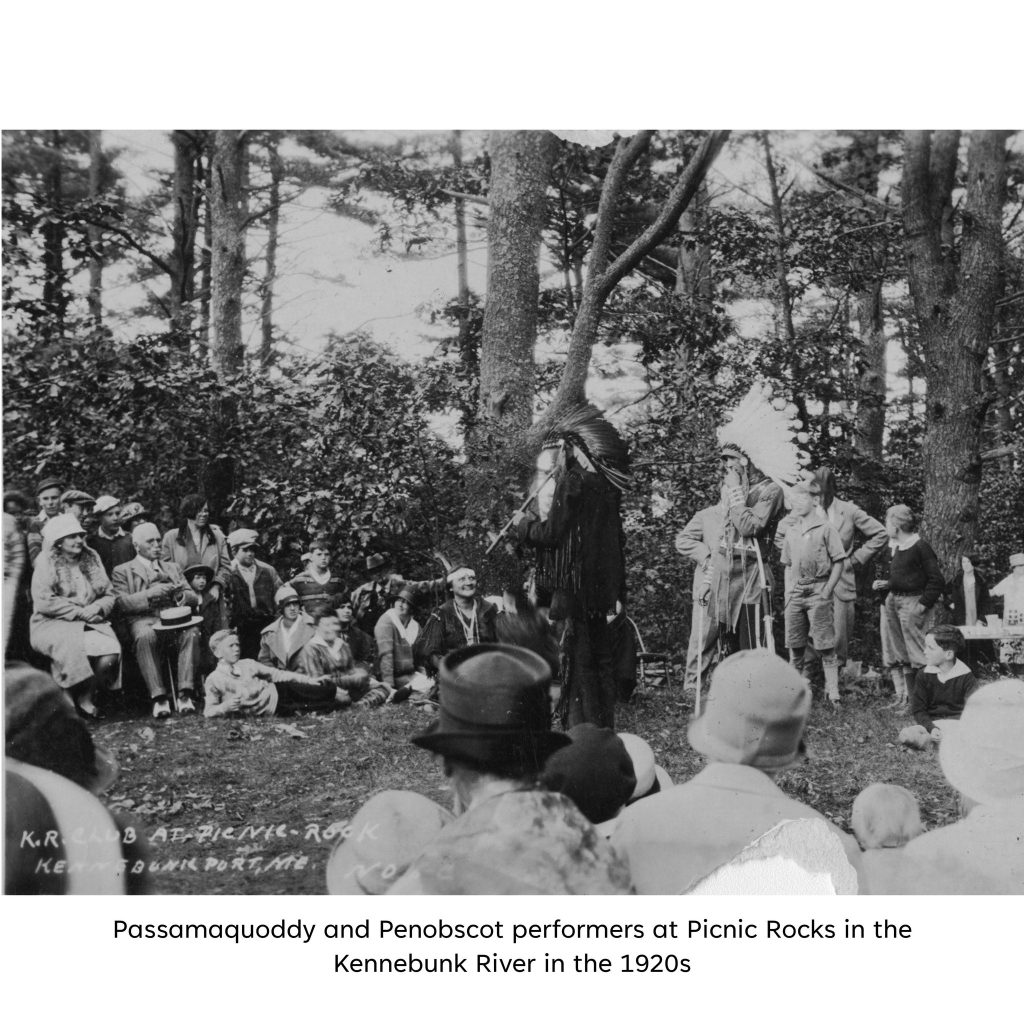
Indigenous families of Maine made Kennebunkport and Kennebunk Beach their summer home from 1879-1927. By 1890, the community near the mouth of the Kennebunk River included five Passamaquoddy families from Eastport under the leadership of L.F. Francisway, and three Penobscot families from Old Town led by Joseph Nicolar.
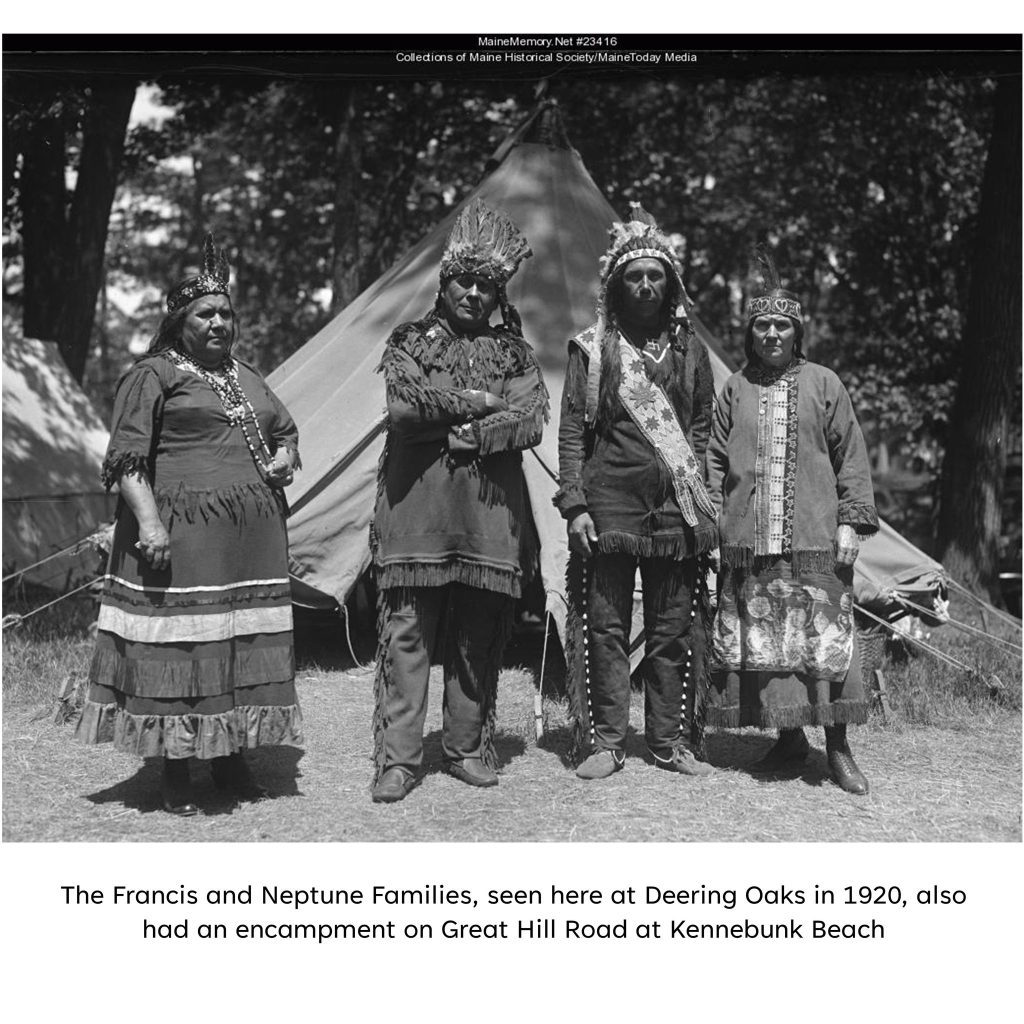
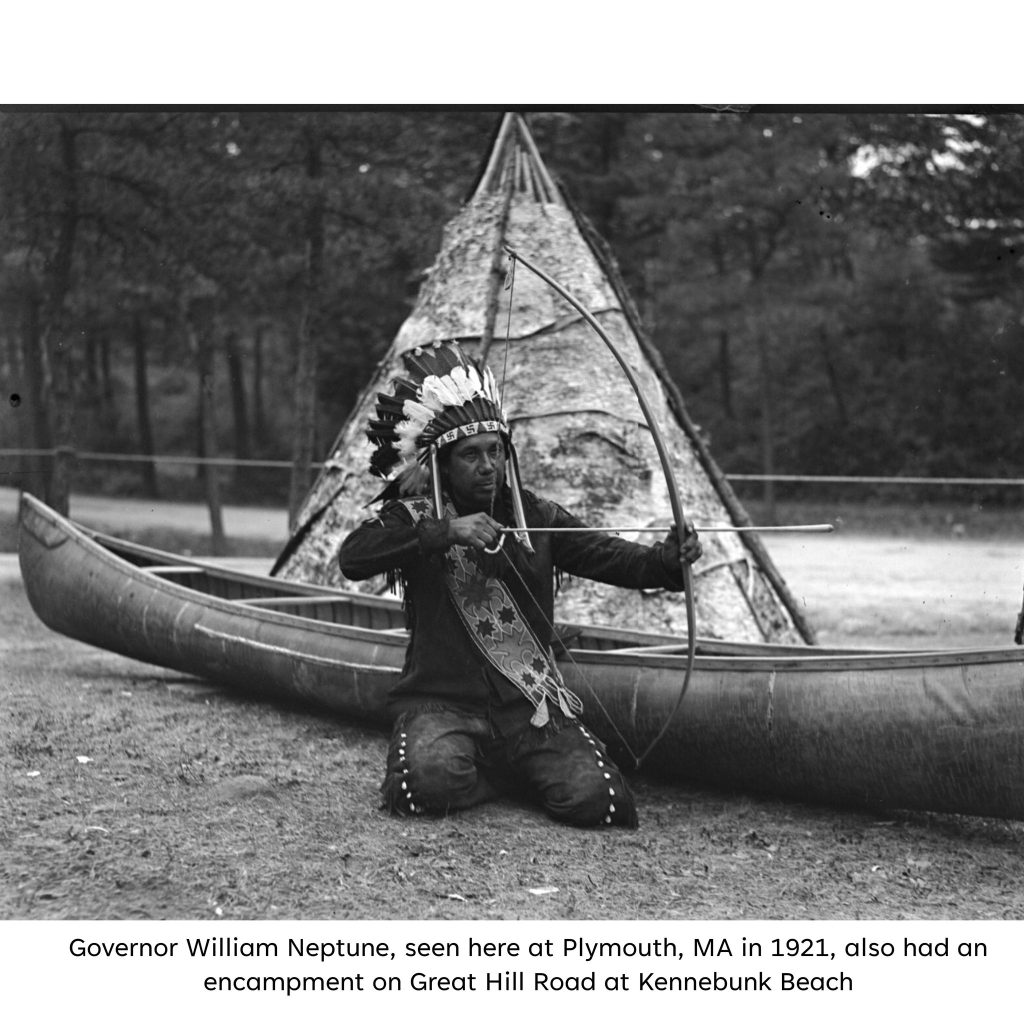
Passamaquoddy families led by Governor William Neptune, eventually moved to an encampment on Great Hill Road at Kennebunk Beach. The governor was a descendant of American Revolution hero, Chief Francis Joseph Neptune.
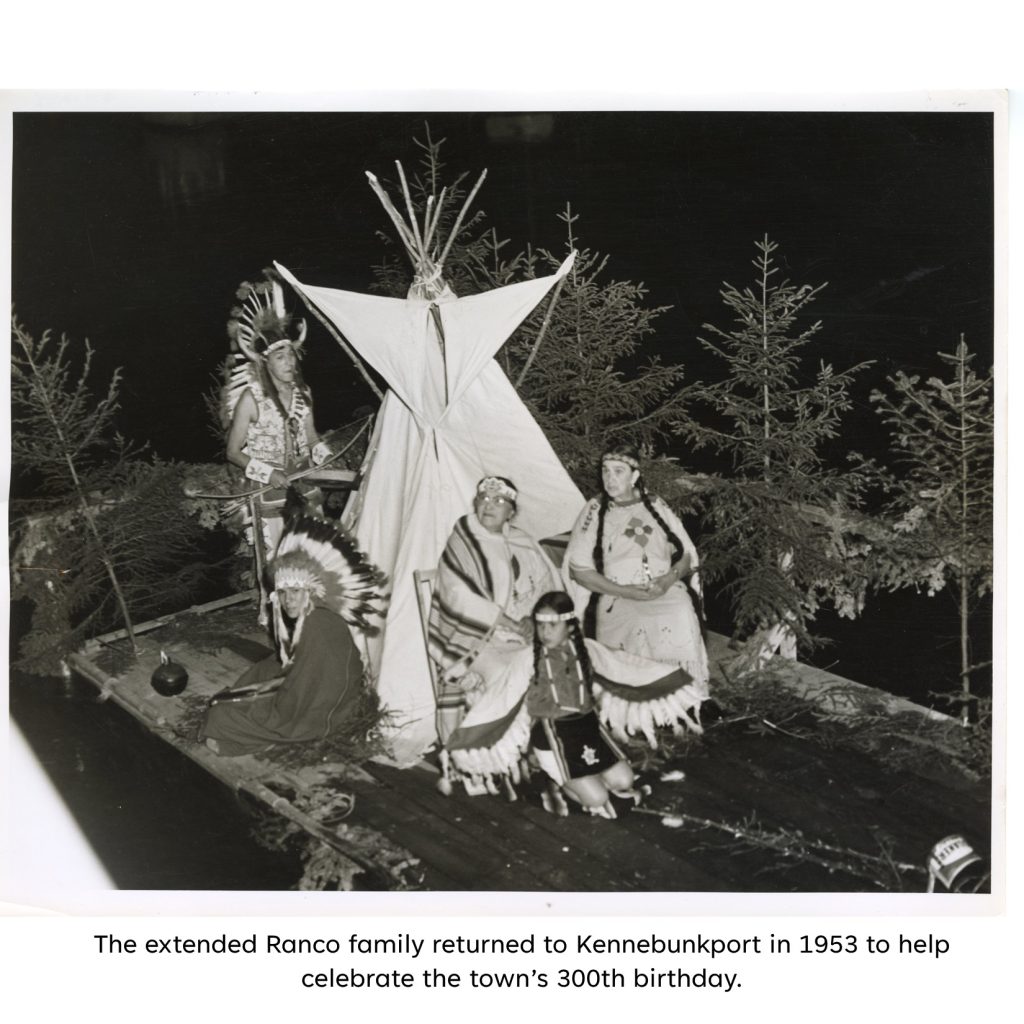
Since the Historical Society has no photos of the Kennebunk Beach encampment, I am sharing photos of Gov. Neptune and his family in Portland, ME and Plymouth, MA. They set up camp at Deering Oaks in 1920 to participate in the 100th Anniversary of Maine’s Statehood. According to our summer tourist newspapers, their Kennebunk Beach encampment was similarly equipped.
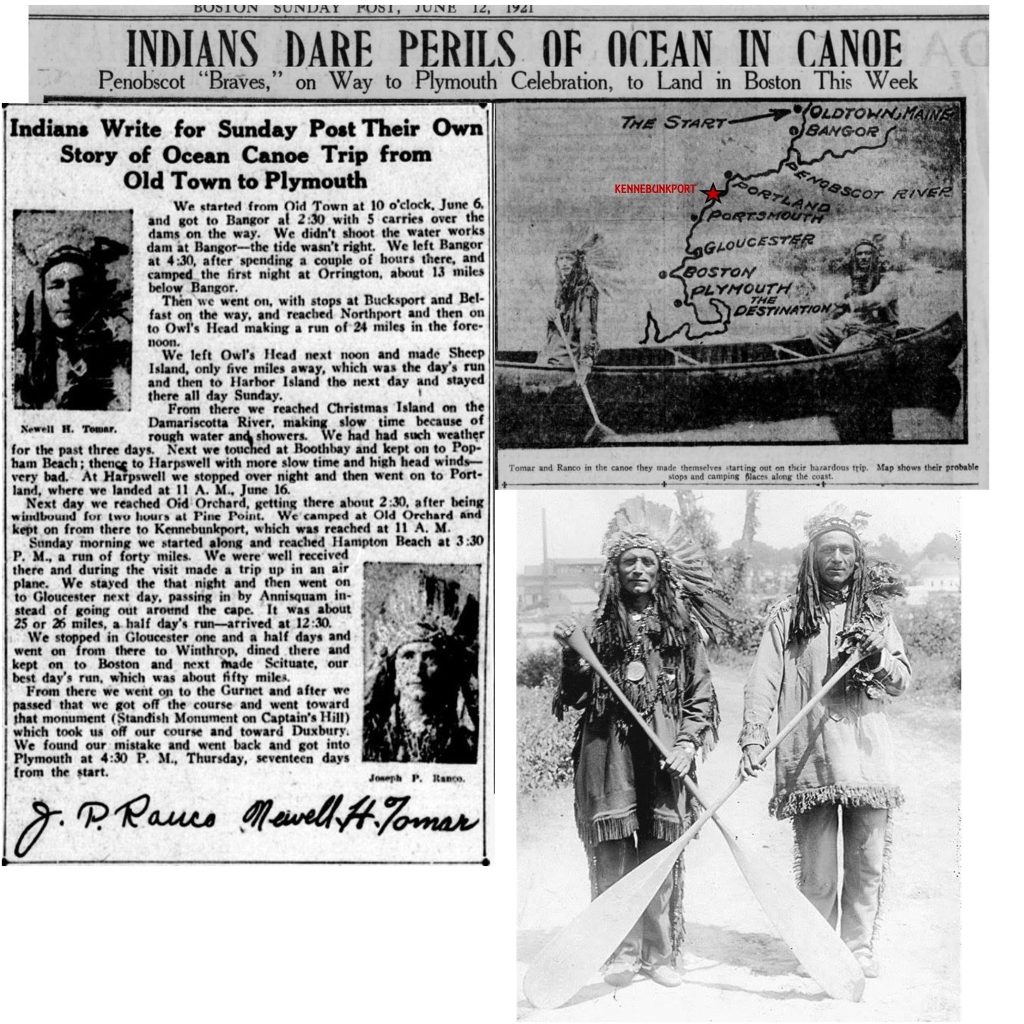
When Maine Penobscot and Passamaquoddy Families were invited to join in the Tercentenary of the Pilgrims landing at Plymouth Rock in 1921, John P. Ranco and Newell H. Tomar, who were ex winners of the Kennebunk River Club canoe races, agreed to go but they wouldn’t ride mass transit with their families. They chose instead to paddle a homemade birchbark canoe from Indian Island to Plymouth, MA., stopping at Kennebunkport overnight.
Boston newspapers reported on their progress along the way. When the Penobscot canoers read the erroneous reporting, they decided to write their own firsthand account of the journey for the Boston Evening Post. Finding Boston hospitality more exhausting than their 300-mile paddle from Maine, Tomar and Ranco pitched a wigwam on the Boston Common on their way home.
Leave a Reply