

Kennebunkport-built Ship Anna F. Schmidt Captured and Burned
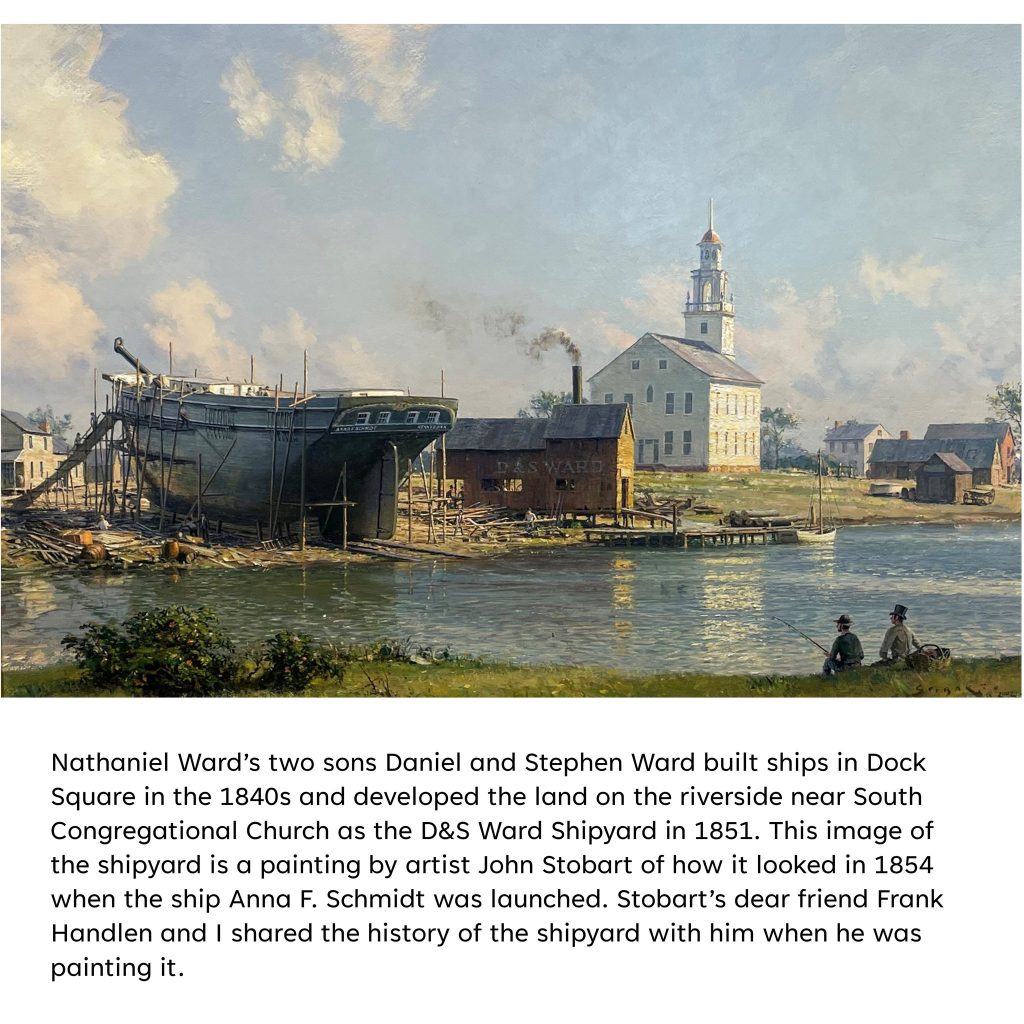
The 784-ton Ship Anna F. Schmidt was launched on August 25, 1854, from the D&S Ward Shipyard in Kennebunkport. Little did her owner, Capt. Charles Williams, know that day that her demise would make international news and American Civil War history.
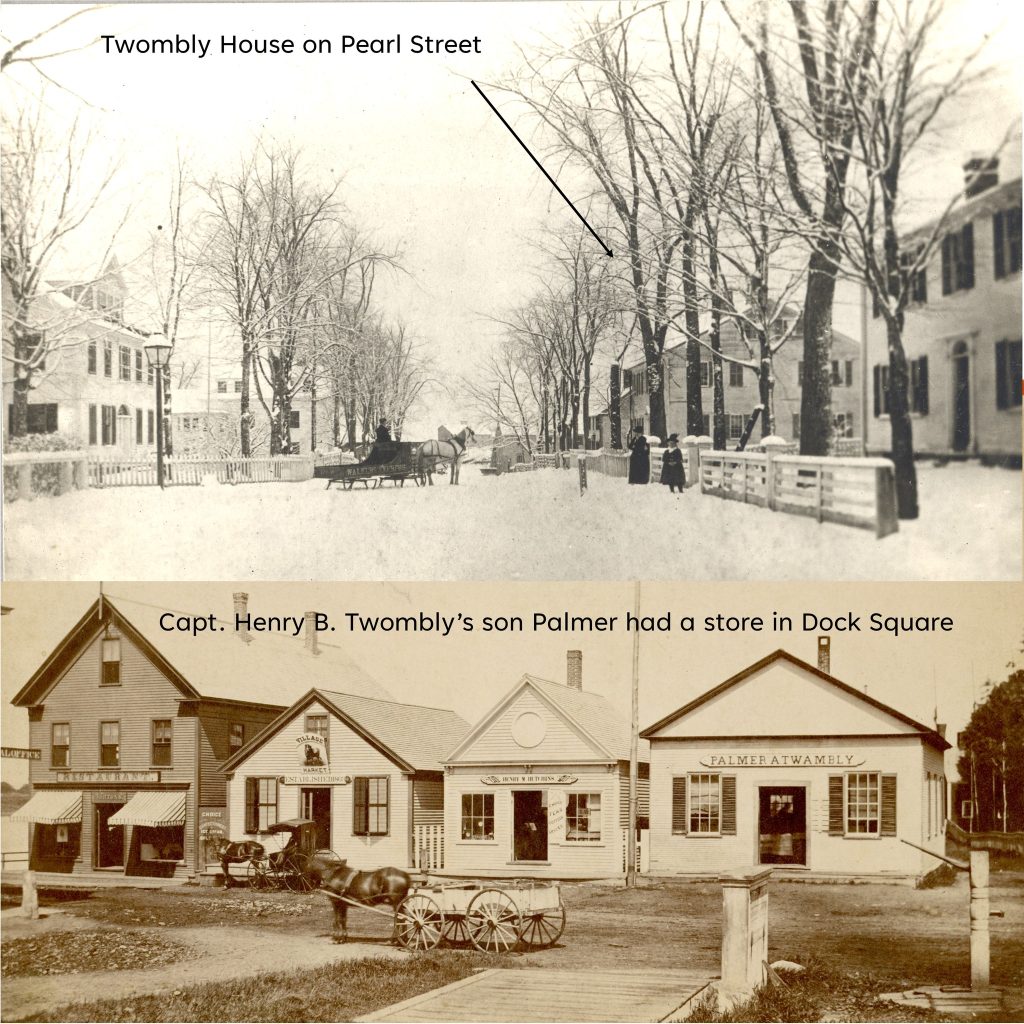
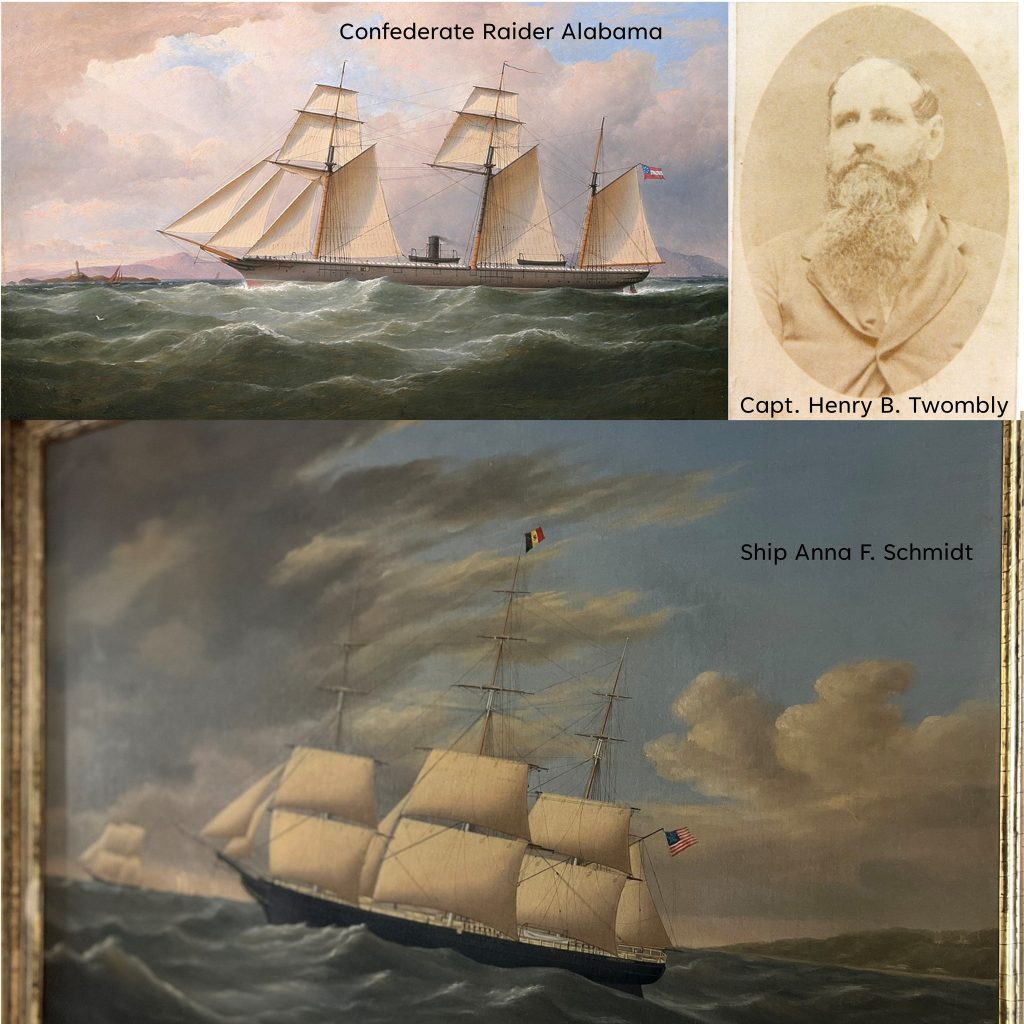
Captain Henry B. Twombly of Pearl Street Kennebunkport was her master by the time she sailed from Boston on January 13, 1863, bound around Cape Horn with cargo for San Francisco. Just two days out, in a heavy gale from the northeast, the ship started leaking badly. When one of her two pumps gave out Capt. Twombly made for St. Thomas for complicated repairs that necessitated unloading the cargo. She finally got back under way on May 3rd.
The ship Anna F. Schmidt was off the coast of Rio de Janeiro on July 1st when her crew called Capt. Twombly on deck to see a steamer six miles away that was rapidly approaching. The steamer flew the American flag, so the captain was not alarmed, but as a precaution, Twombly “crowded on the canvas” and sailed with his lights extinguished all that night.
As dawn broke the next morning, though, the 990-ton steamer was there, firing across their bow. She came alongside, identifying herself as Confederate privateer, Alabama. Captain Twombly and his crew were captured. They watched from onboard the Alabama in irons as their ship Anna F. Schmidt was set ablaze and finally sank. Captain Twombly, along with prisoners from other raided Union merchant ships, was put aboard a passing Irish vessel, Star of Erin, headed to London. He found his way home to Kennebunkport by October 1863.
Owners of some 68 captured and burned Union merchant vessels were furious, and not just with the Confederate Raider. The Alabama had been built in supposedly neutral England. A British crew had delivered her to the Confederate crew, and she was continually supplied from Great Britian. After the war, the Alabama Claims were filed against Great Britain for violating their neutrality. The dispute was finally settled in 1872 by the Geneva Arbitration Tribunal, awarding the U.S. $15.5 million in damages.
Leave a Reply