

Pirates of the Caribbean and the Gulf of America
What does a Kennebunk Sea Captain killed by pirates have to do with the Monroe Doctrine? Be forewarned, the story is not for the faint of heart.
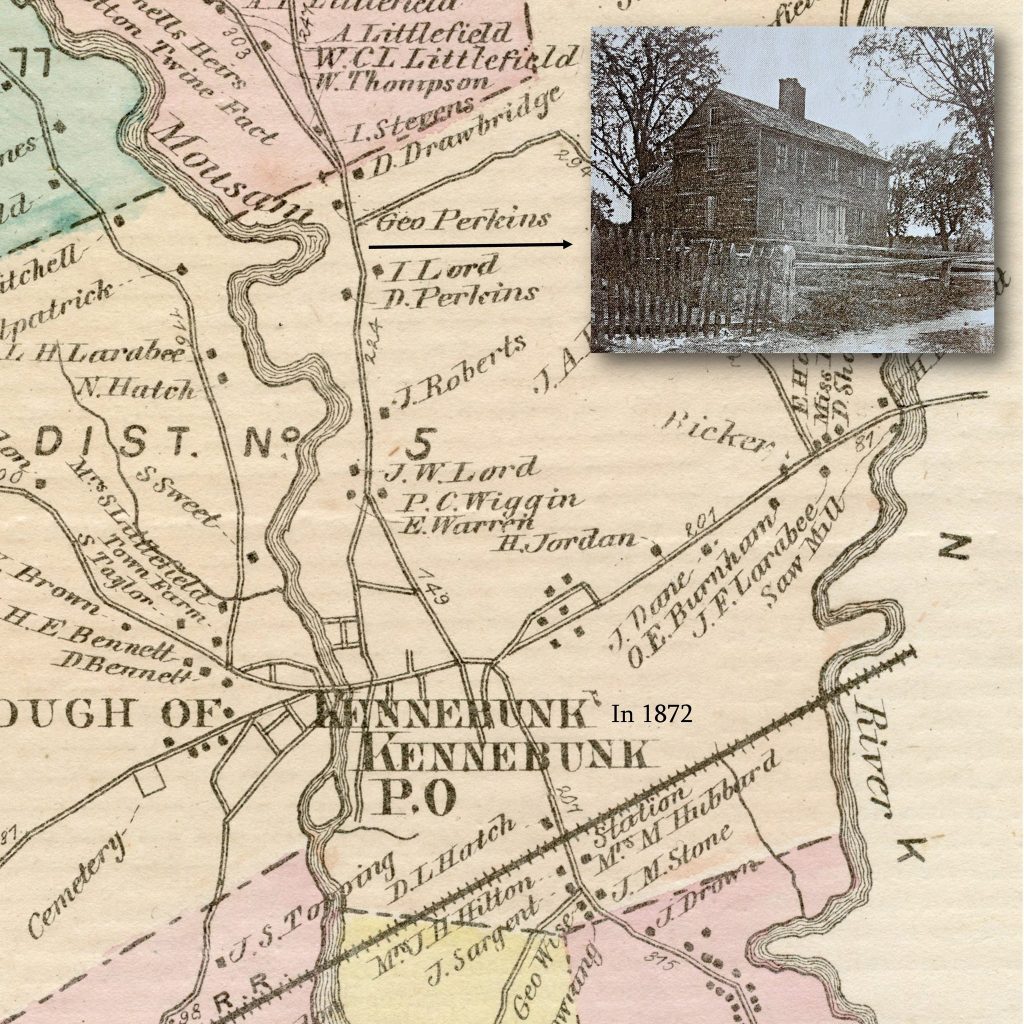
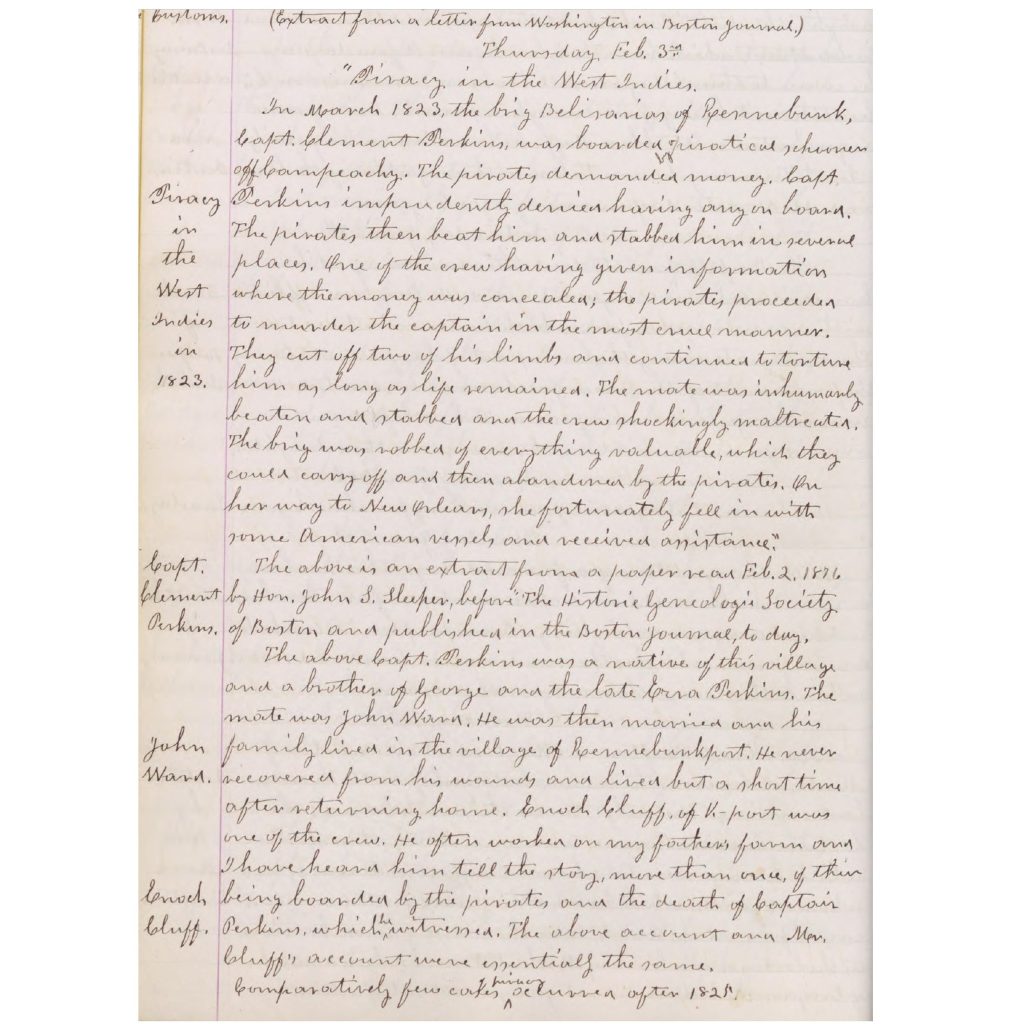
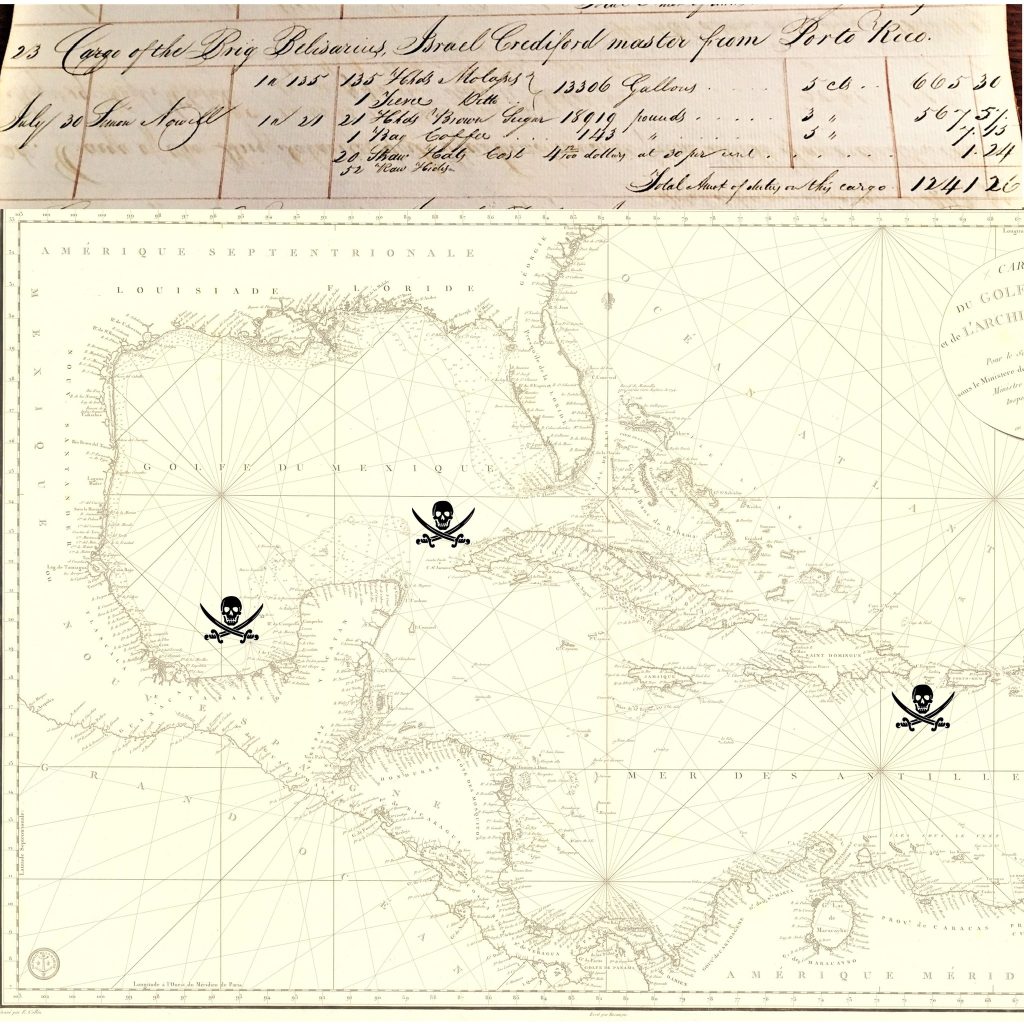
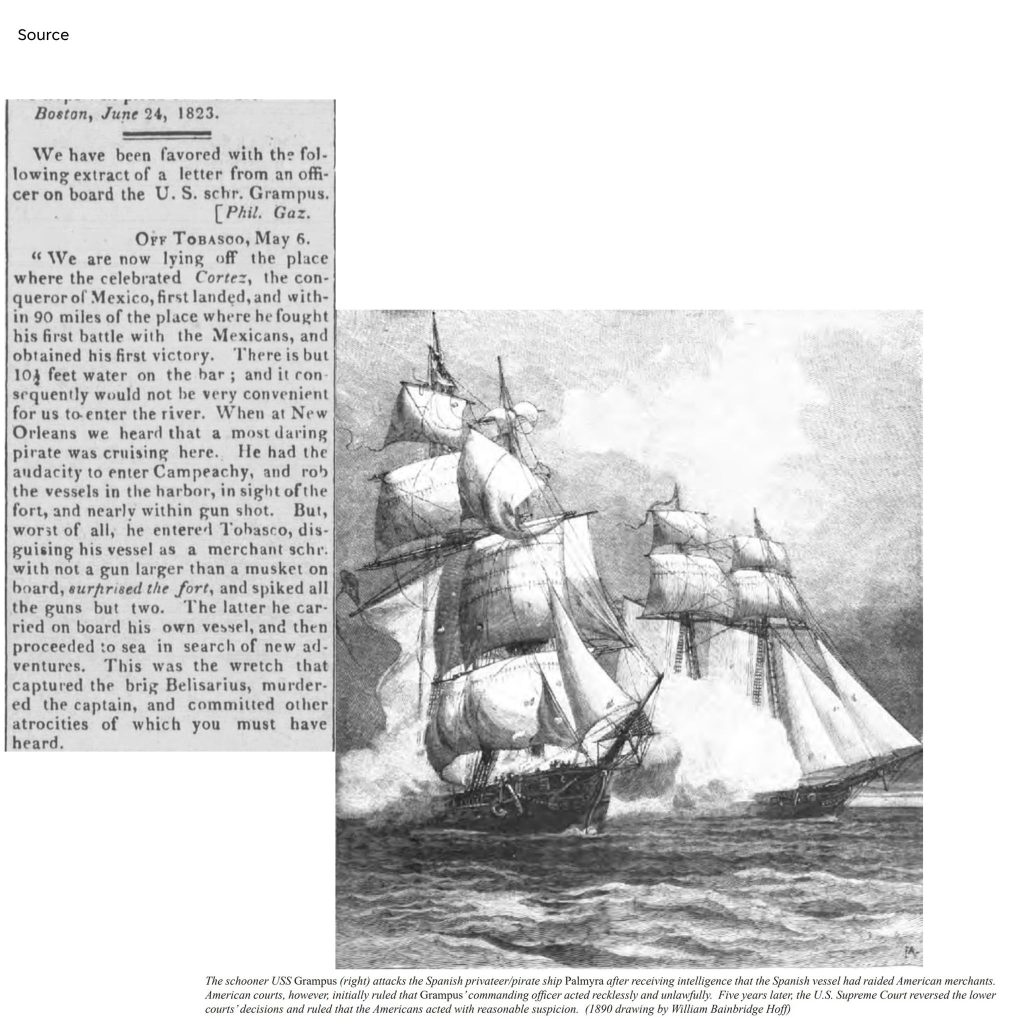
Capt. Clement Perkins, 30 year old grandson of the Thomas Perkins who built the oldest house still standing in Kennebunkport, was familiar with the dangers of sailing to the West Indies when he first took command of Simon Nowell’s brig Belisarius and embarked for Haiti. He then proceeded into the Bay of Campeche, between Mexico and the Yucatan Peninsula. While anchored there, in view of the fort, the Belisarius was boarded by some 40 knife-wielding pirates demanding treasure.
At first, Captain Perkins refused to tell them where the money was hidden. He revealed his hiding place of 200 doubloons only after the pirates had cut off his left arm. Unsatisfied with the amount, the pirates savagely cut off his other arm and one leg before murdering him by stuffing oil-soaked oakum in his mouth and lighting him on fire. They killed the cook and stabbed the first mate in the leg before robbing the Kennebunk brig of anchors, cables, sails, rigging and provisions, and setting her adrift. Crewman, Israel Ward took command of the disabled brig.
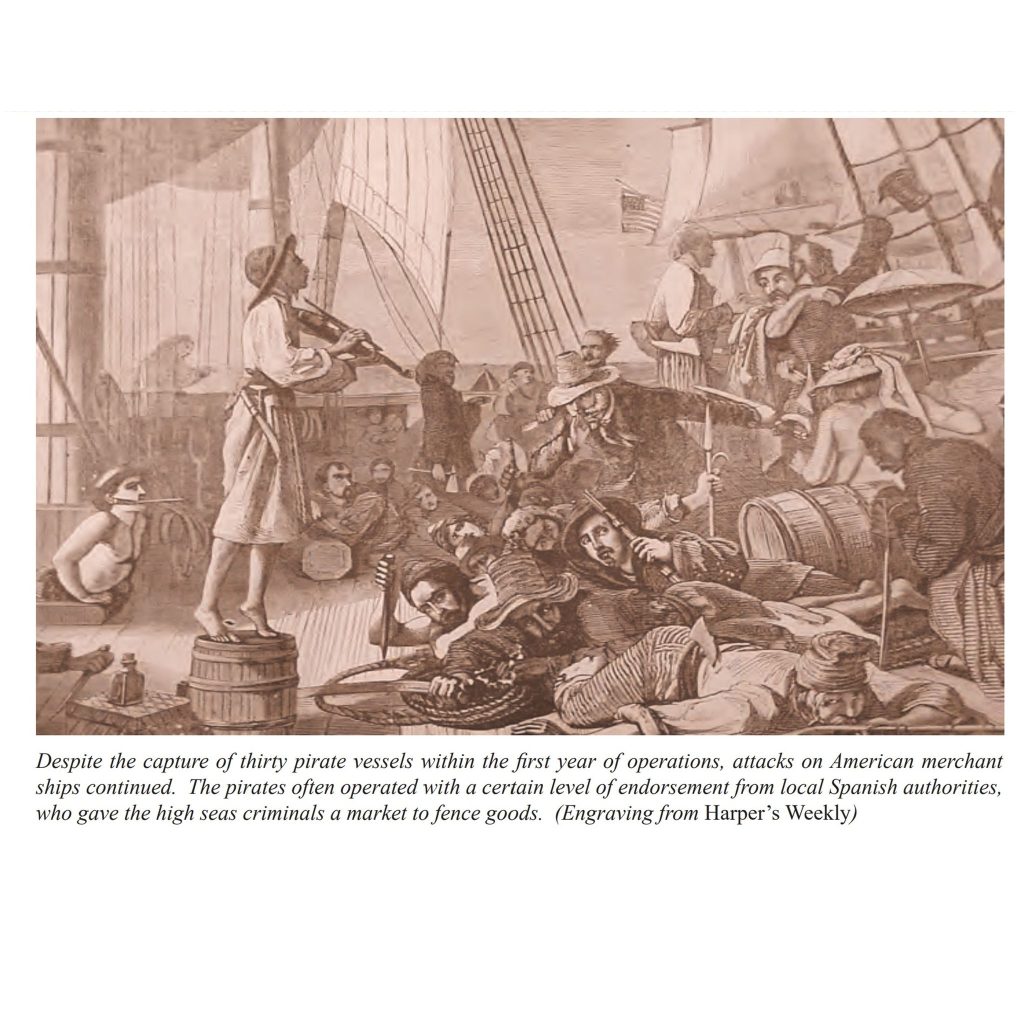
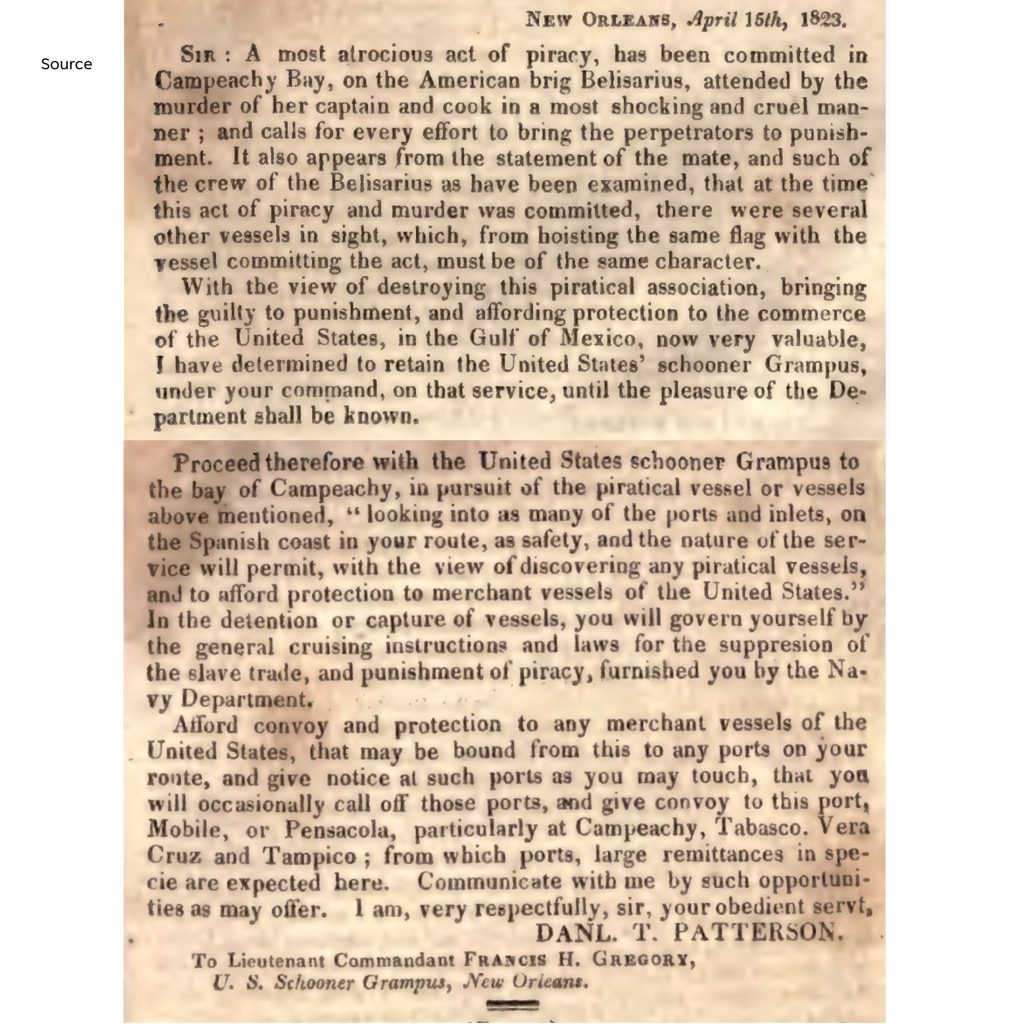
There was still a lot of piracy in the West Indies and in the Gulf of Mexico in 1823 despite U.S. Navy efforts to curtail it. Spain benefited when cheap pirated goods came to market in South America so they would not pursue pirates or allow the U.S. Navy to land at any of their colonies to apprehend them. The torture and murder of Capt. Perkins was the last straw. Commodore Daniel T. Patterson, nemeses to the famous pirate Jean Lafitte, deployed the U.S.S. Grampus to the Bay of Campeche.
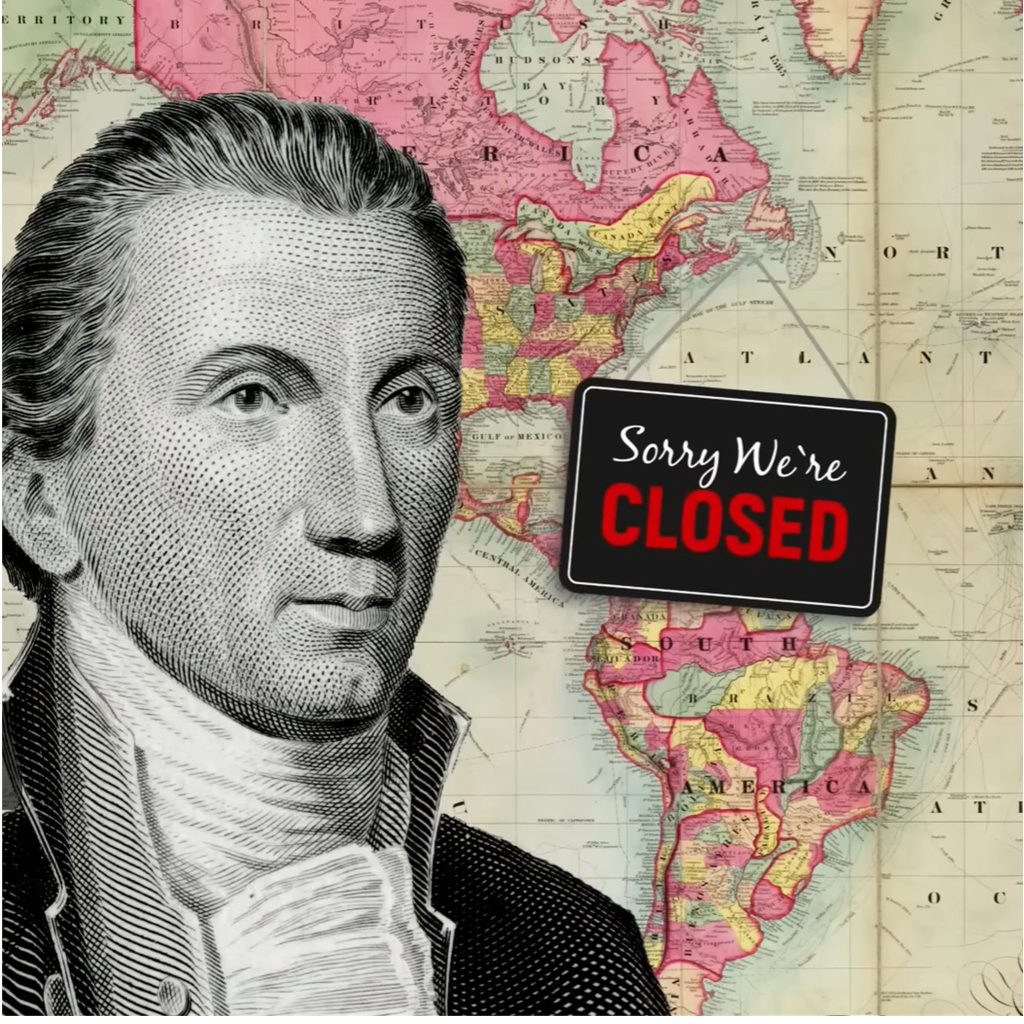
Between 1810 and 1822, fifteen Latin American colonies declared independence from the Spanish empire. James Monroe and Secretary of State John Quincy Adams did not want to see the Americas recolonized by Europeans who would likely continue to impede U.S. commercial potential. The following December, President James Monroe, who had visited Kennebunk in 1817, articulated The Monroe Doctrine in his message to Congress.
Leave a Reply