
Slave-trader sloop Mary hid out in Paddy Creek
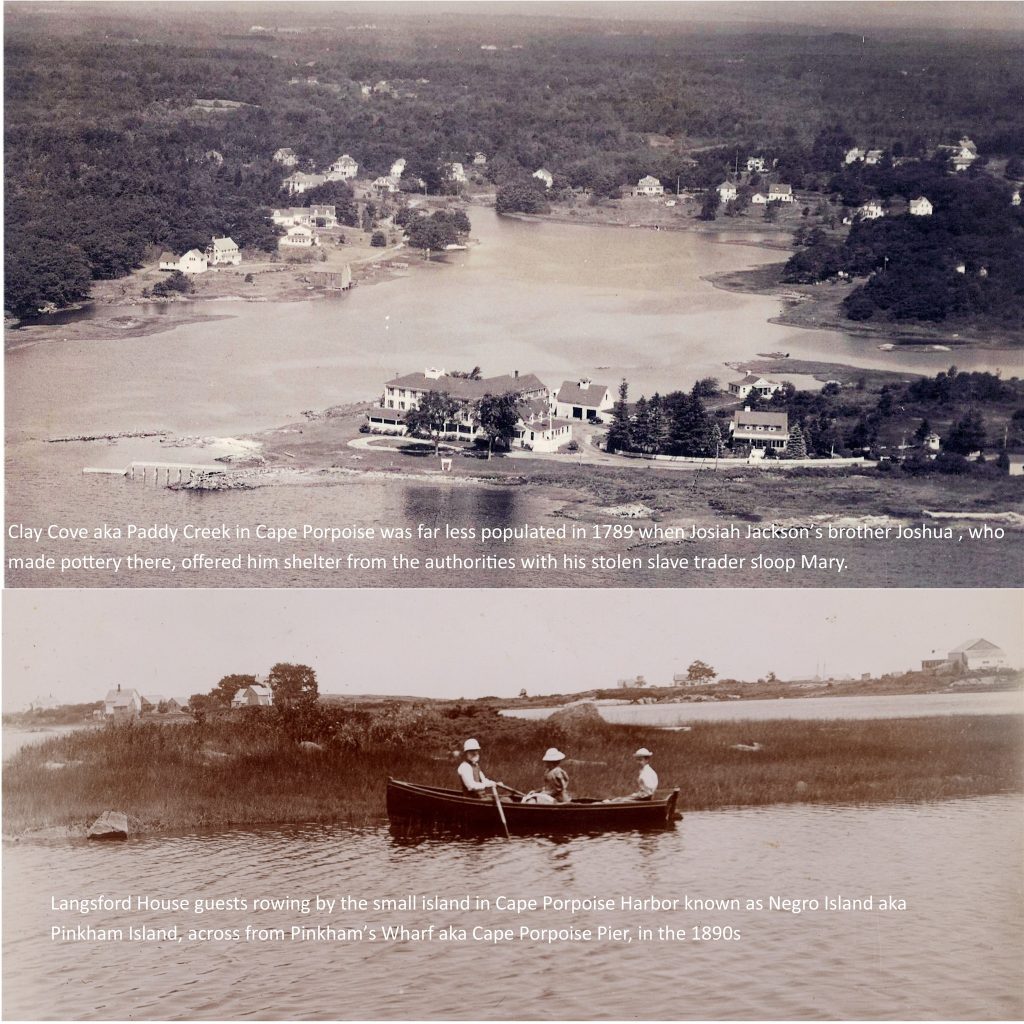
Pinkham Island in Cape Porpoise Harbor was called Negro Island until about 50 years ago. On some documents, a more offensive name was used. I have read stories about an escaped enslaved person who, after rescuing a local child from drowning, was allowed to reside there on that poison ivy covered rock after the Civil War, but the island was given that name long before the Civil War.
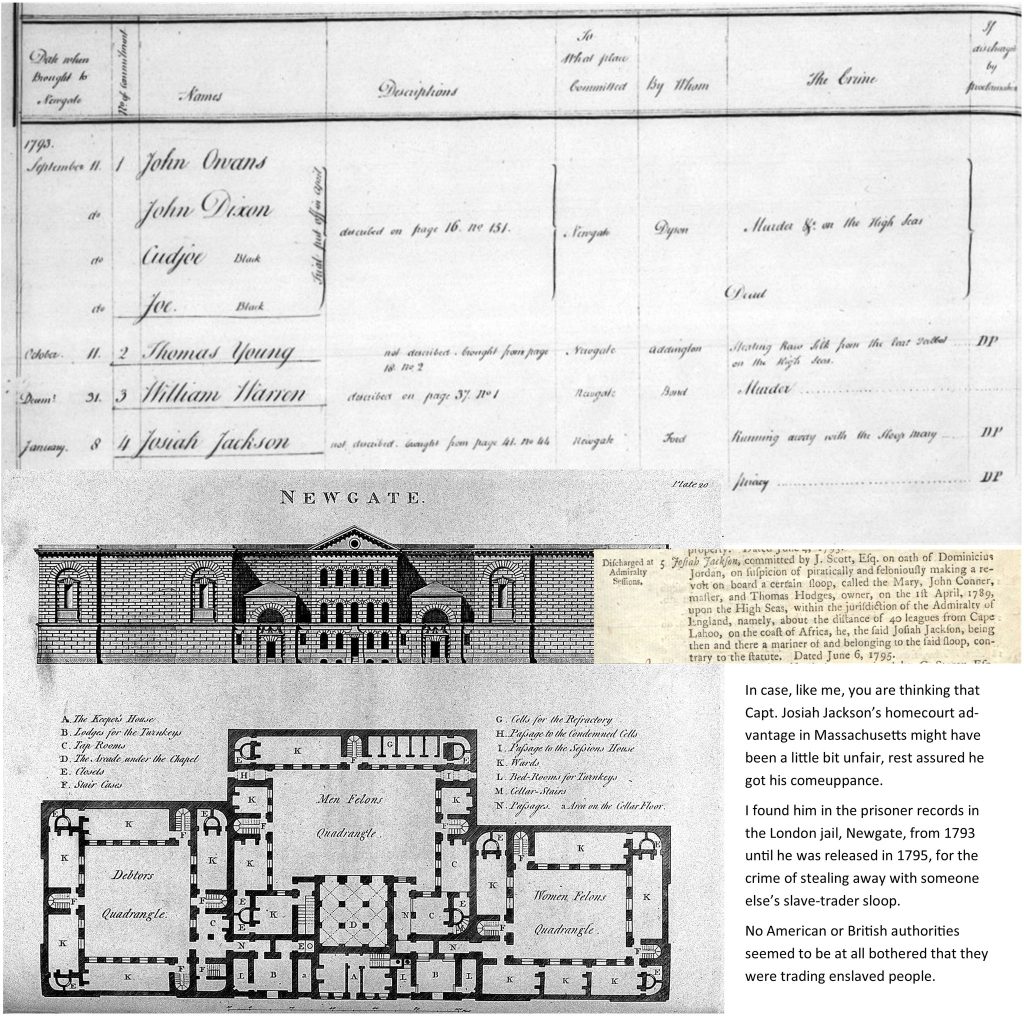
An unregistered 30-ton English slave-trader sloop Mary dropped anchor near what is now known as Willards Beach, on July 17, 1789. Local fishermen, who well-remembered the damage British Ships had done to their environs a few years earlier, greeted the American captain Josiah Jackson warmly even though all vessels were supposed to register with the Customs Collector in Portland. Capt. Jackson’s crew consisted of Thomas Bird, a 39-year-old Englishman; 19-year-old Hans Hanson, a Norwegian; and Cuffey, an African boy whom Jackson said he bought at a place along the Guinea coast called Ningo Grandy.
They drank, traded with the fishermen, and told stories of the African coast before someone thought to alert the Portland Customs Officer. By then, the little sloop had slipped away to anchor at Cape Porpoise Harbor. The crew spent the night with Josiah Jackson’s brother, Joshua, who was a potter conducting business at Clay Cove aka Paddy Creek.
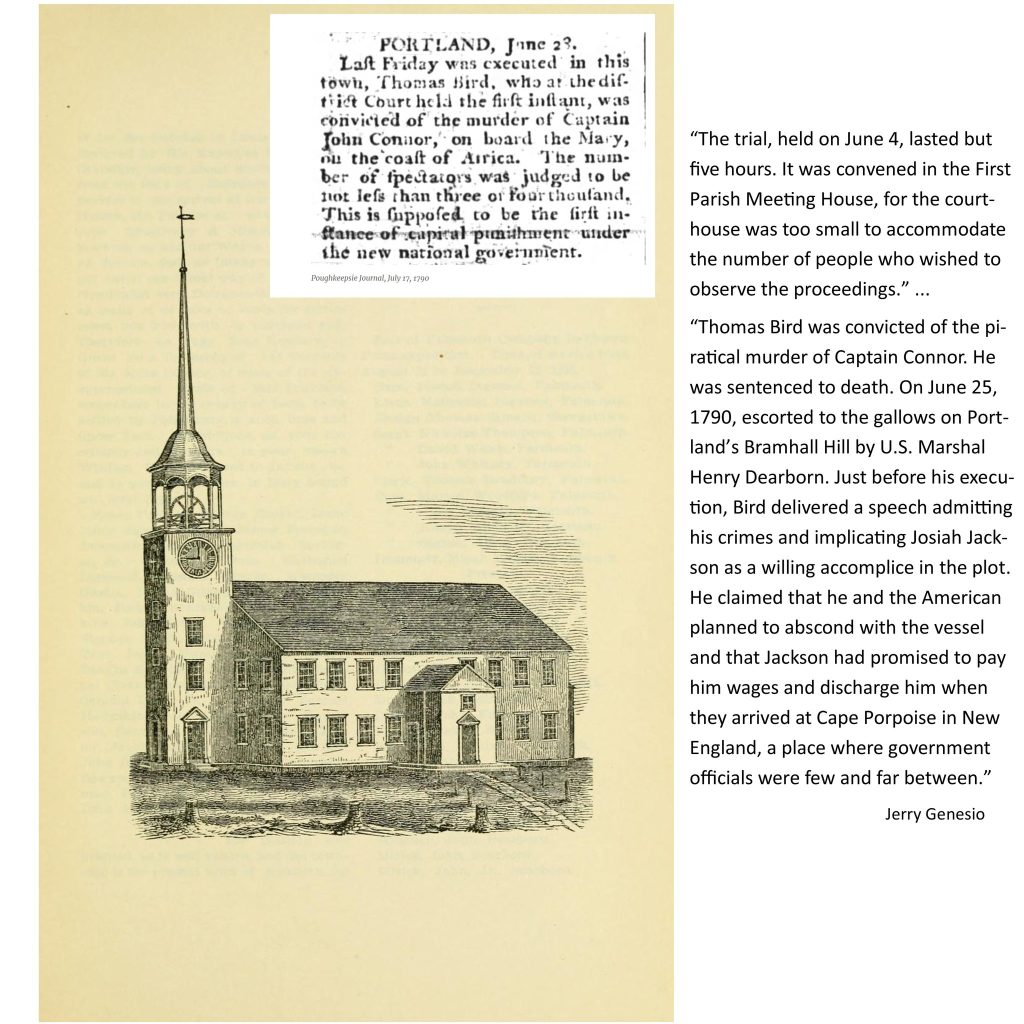
After finding the British sloop at Cape Porpoise the next day and towing her to Portland the officials learned that her original British captain John Connor had been murdered at sea by this crew. The Englishman and the Norwegian boy were immediately thrown into prison.
According to Jerry Genesio’s interesting paper, The Trial and Execution of Thomas Bird in Portland, Maine, 1790: The First Execution under the United States Constitution, Josiah Jackson’s brother Joshua secured his release with his enslaved boy Cuffey in exchange for collateral placed on his Cape Porpoise land.
Thomas Bird was the only British crewmember and the only person hanged. Josiah Jackson, who was described in contemporaneous newspapers as a man from a good Newton family who had served his country well in the late war, was never charged, in America that is, and nothing further was heard of Cuffey.
I thought I was onto something with the African boy that Josiah Jackson bought on his travels but in the end, I learned that Negro Island was already so named by the time it was granted to John Murphy in 1749. I’ll keep looking
Leave a Reply