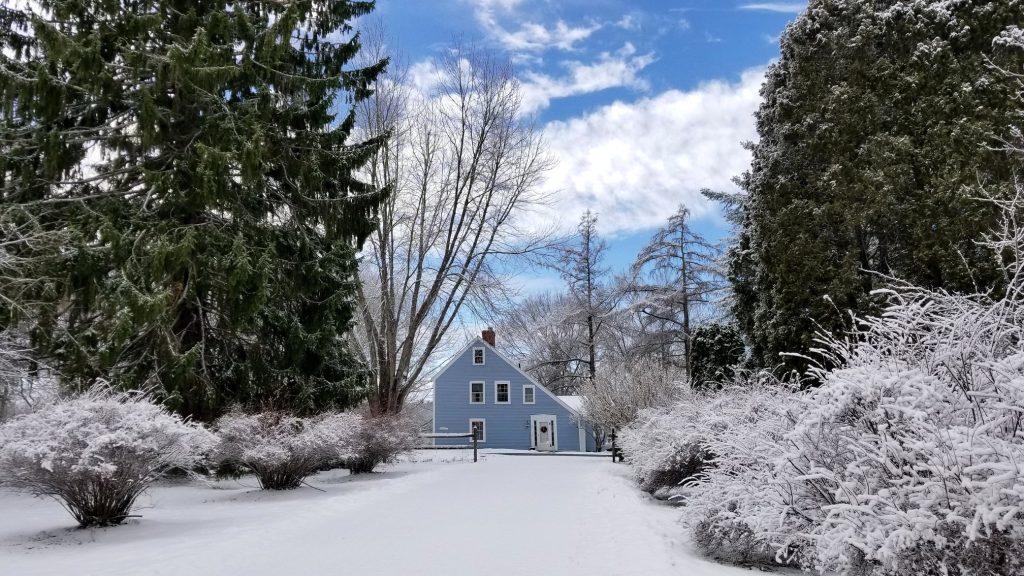

The Oldest House in Town

Captain Thomas Perkins brought his family to Arundel from Greenland, NH in 1720. Within a few years, he owned about all the land along the Kennebunk River from Bass Cove and Walkers Point. That area includes all of Kennebunkport Village and Cape Arundel today.

His eldest son, also named Captain Thomas Perkins, built the Oak Street saltbox featured in today’s story c. 1724. The oldest house standing in Kennebunkport is now just shy of 300 years old. It stood alone in the wilderness in 1724 still very vulnerable to attacks by the local Indian tribe who had fished the Kennebunk River for thousands of years before the Englishmen “discovered it.”

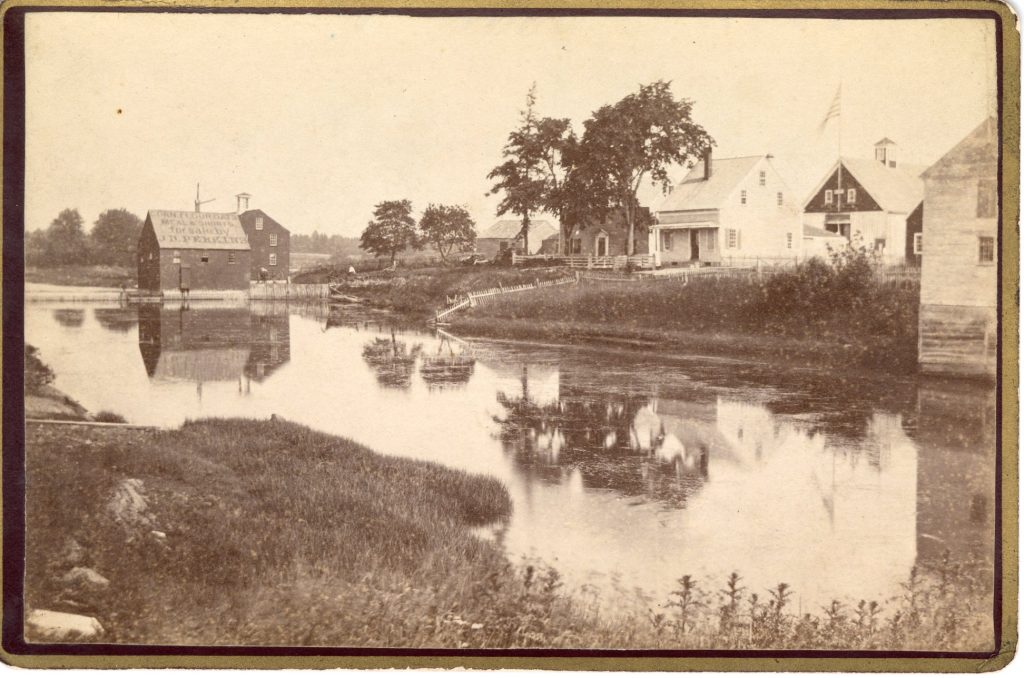
The younger Thomas Perkins commanded a company of Arundel men in the French & Indian War. He was appointed King’s Surveyor in 1749. As such, it was his job to reserve the tallest and straightest Arundel trees as masts for ships belonging to the King of England. Thomas Perkins collected the selected tree trunks in nearby “Mast Cove” pending transport to England. That same year, Thomas and his sons Eliphalet and Abner, also built the familiar Perkins Grist Mill on Mast Cove. Eliphalet Perkins built a home across the cove where the shipyard would later stand and Abner Perkins, who ran the Grist Mill, built a home that still stands on Locke Street.

Captain James Perkins, inherited the old homestead when his father Thomas Perkins died in 1752. In 1787, the local doctor, Thatcher Goddard, persuaded the captain to temporarily turn his house into a hospital since smallpox had come to Arundel from the West Indies that year in one of his ships. Confronted by horrified villagers, Dr. Goddard saved many lives in this old house by inoculating the inhabitants of Arundel with small amounts of the live smallpox virus, some 9 years before the smallpox vaccine was officially invented.

James would again sacrifice for the good of others in November 1800. He and his son James Jr. were decorated by The Humane Society of Massachusetts for heroic efforts in rescuing and reviving six people from drowning in the Kennebunk River in front of the old house on Oak St.

Captain James Perkins Sr. died in 1825, leaving his house and his share of the Grist Mill to his son Tristram Perkins. Tristram was never married. He ran the grist Mill for many years and lived in this old house until his death in 1880. The house was sold out of the Perkins family in 1882 for the first time in 158 years. The new owner planned to demolish the old house, which looked to be in rough shape in 1882 but by some miracle, it was saved and restored.
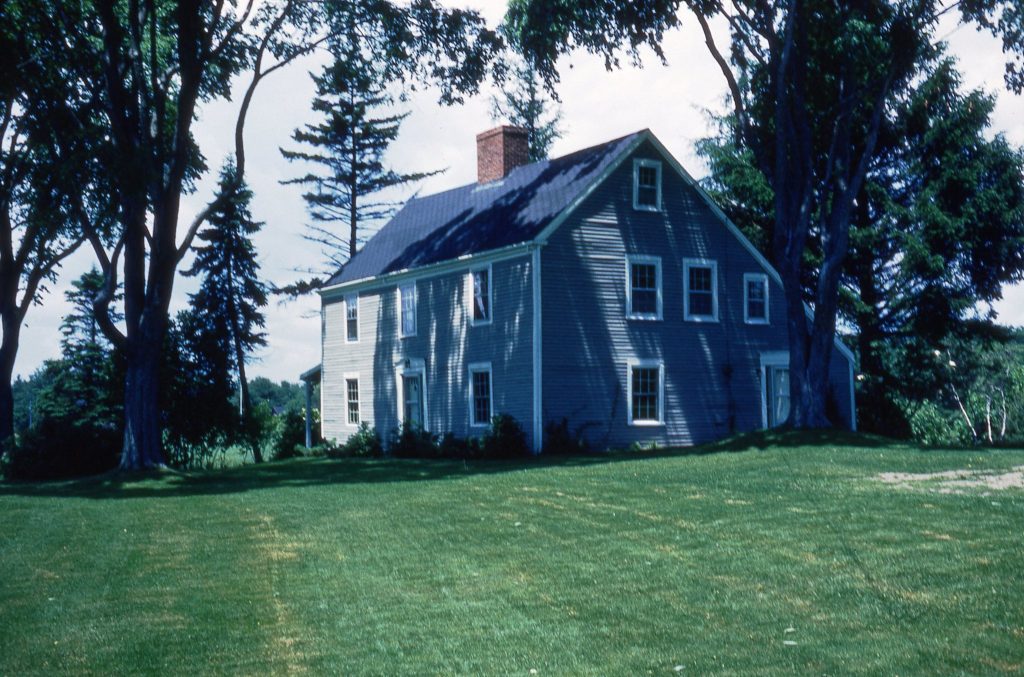
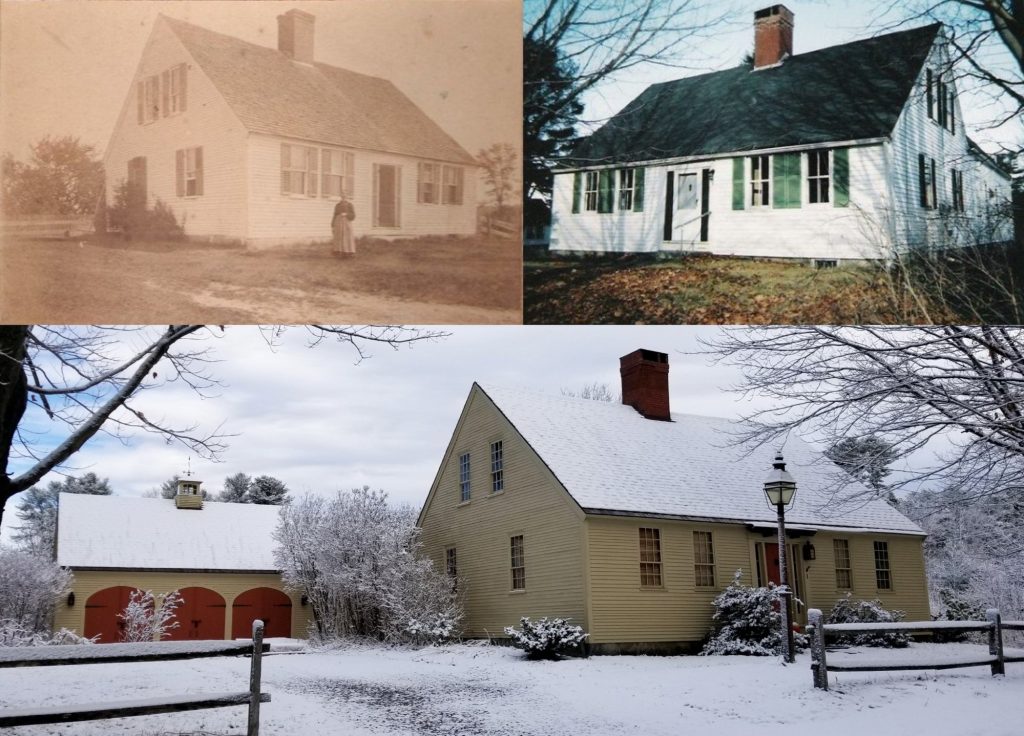
1965 photograph of the Thomas Perkins house. I believe the Wyeth family owned the house then.
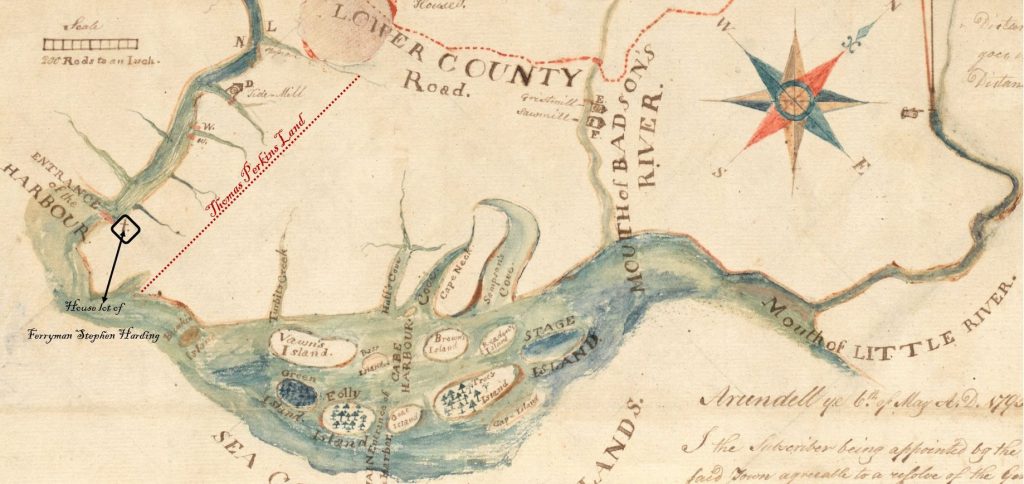
Captain Thomas Perkins brought his family to Arundel from Greendland, NH in 1720 to claim a grant of land that had been made to his father before the town was wholly abandoned in 1689. Within a few years of his arrival, Captain Thomas Perkins owned all the land along the Kennebunk River from Bass Cove and Walkers Point, with the exception of Ferryman Stephen Harding’s small house lot near the mouth of the Kennebunk River. Today his land would include all of Kennebunkport Village and all of Cape Arundel.
The Perkins Tidal Grist Mill was built on Mast Cove in 1749 by Thomas Perkins and his sons Eliphalet and Abner. It was passed down through generations of the same Perkins family until 1862 when a great-great-grandson of Eliphalet sold the mill to Simon Nowell Perkins. Simon was no relation to the builders of the mill. He descended from the Perkins family that had resided in Cape Porpoise since 1719. Simon handed the mill down to his son James D, who in turn left the mill to his son James C. who operated it as a grist mill until 1939. In 1940, James C. Perkins’s daughter Louise and her husband, Arthur Lombard, opened it as the Olde Grist Mill Tea Room. The historic Mill building burned in the early hours of September 14, 1994.
Abner Perkins built his home on Locke Street c.1747
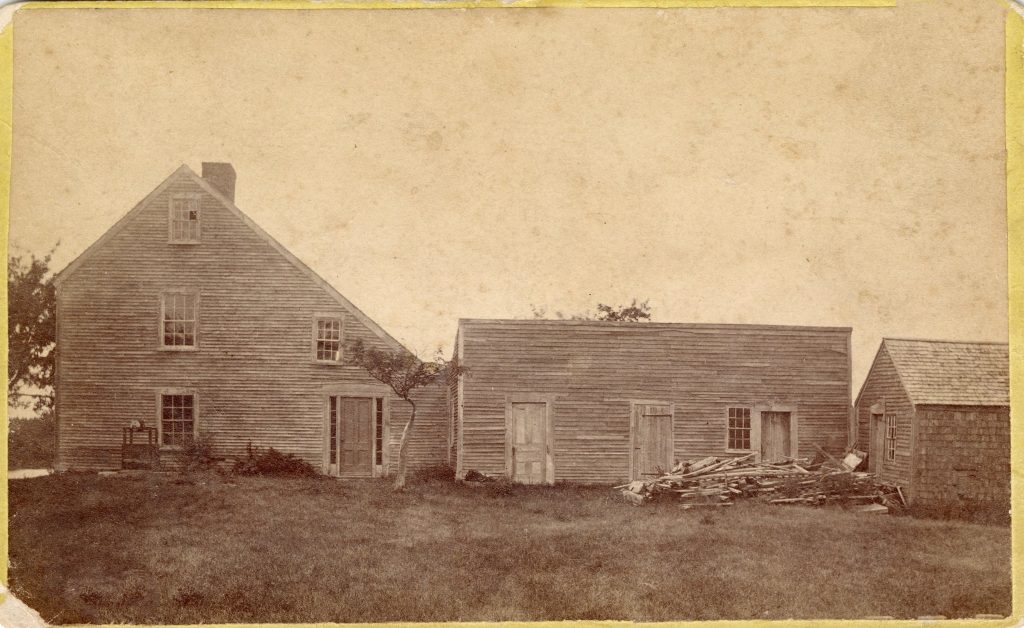
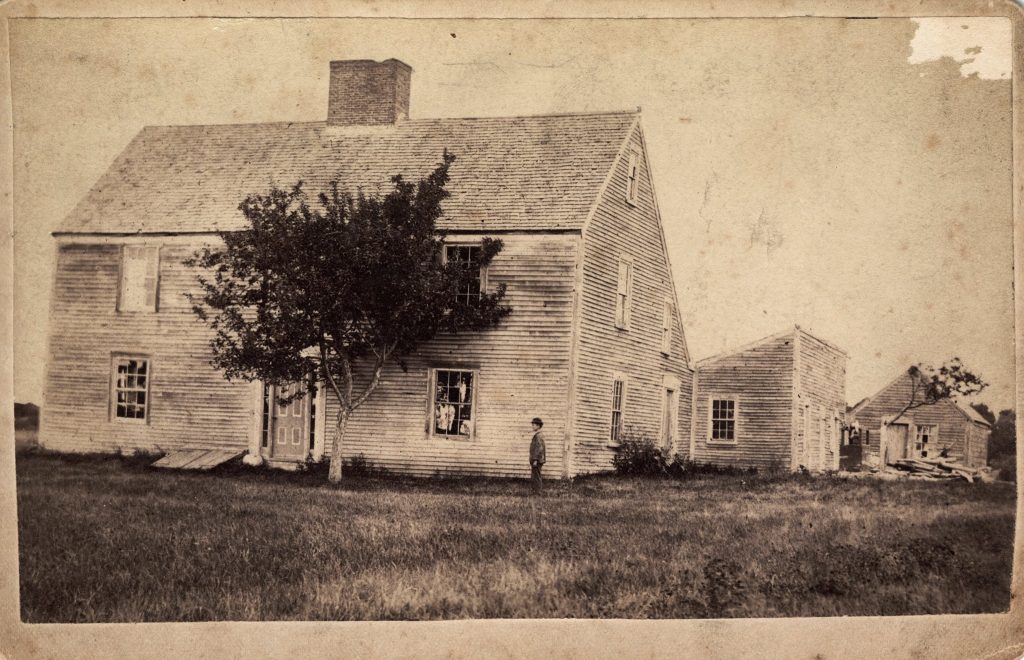
Historian Joyce Butler dates the Thomas Perkins house at 1724 since family tradition says all the children of Thomas and Lydia Perkins were born in the house. Thomas Perkins’s father Thomas gave him the 50-acre lot where the house was built in 1727, but as Joyce also points out, there is no mention of an existing dwelling in that 1727 instrument. We’re calling it c.1724 to make allowances for a few years in either direction. Even if the house was built in 1728 it has no competition for being the oldest house in the village unless you count his father’s house on South Main St that was built c. 1727. Here is how the Oak Street Thomas Perkins house looked in 1882. Tristram Perkins had died in 1880, leaving the farm to his nephew Henry C. Perkins who sold the old farm to William Peabody for $500 in 1882.
An announcement was published in the Eastern Star that Mr. Peabody intended to tear the house down and replace it with a modern structure that would appeal to summer cottagers. By some miracle, the old house was saved.
March 27, 1883 Anna C. Nevins bought the old house for $900. She added the wraparound porch for summer living.
The oldest house in town as it looked yesterday morning

Leave a Reply

Your email address will not be published.